

Backtest · ARM
Backtest ARM — Candle by Candle
ARM has the shortest history in this catalogue and the page is going to lead with that rather than bury it: the archive starts at the September 2023 IPO, because that is when the stock started. There is nothing before it to hold back and nothing to unlock. What that means practically is that a serious backtest on ARM is difficult, and it is worth understanding exactly why before you spend an evening on one.
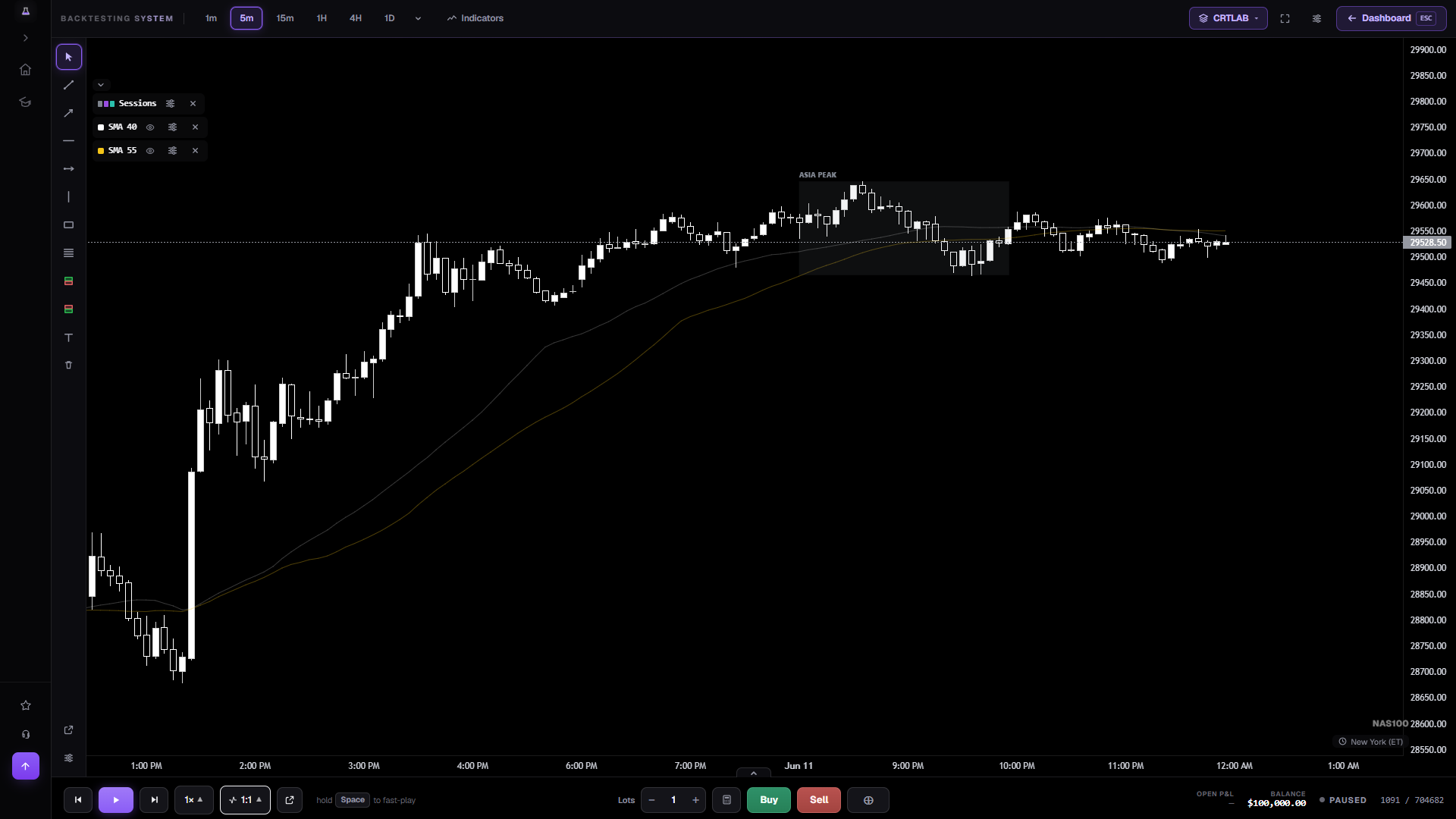
What a short archive can and cannot tell you
Roughly two and a half years of daily bars is a few hundred observations, and a setup that fires once a fortnight gives you perhaps sixty trades in the whole file. That is enough to notice something and nowhere near enough to conclude anything: run it through the sample size calculator and a realistic edge will still have a confidence interval containing zero.
There is a second problem specific to newly listed stocks. The first year of a listing is not representative of the instrument afterwards — the float is smaller, the shareholder base is unstable, and lock-up expiries create supply events that will never recur. A rule tuned on ARM's first months is tuned on conditions that no longer exist.
What ARM is genuinely good for is intraday work, because the one-minute data is dense even when the daily file is short. If you are testing an opening-range or session rule, a few hundred sessions is a usable sample even though a few hundred days is not — and that distinction is worth internalising for every short-history instrument, here and elsewhere.
What the ARM data actually is
The archive runs from September 2023 to the most recent session we hold, on every timeframe from one minute to monthly. It is open from the first chart — there is no plan that unlocks more of it, and no shorter window for people who have not paid.
Equity data here is regular hours only — 09:30 to 16:00 New York, no pre-market and no after-hours. That is not a gap in the data, it is what an equity session is, and it has a consequence worth planning for: every trading day opens with a gap rather than continuing from the previous close, so any rule you carried over from an index future or an FX pair is about to meet a discontinuity it has never been tested against.
Prices are split-adjusted throughout, so a chart of 2019 shows what you would compare against today rather than the raw tape. Getting this wrong is the classic silent equity-backtest bug: an unadjusted series prints a 90% single-day crash on the split date, and a stop-loss rule tested through it produces numbers that mean nothing.
How to backtest ARM without fooling yourself
Test intraday, not swing. The number of one-minute bars is large; the number of days is not. Match the timeframe to where the sample actually is.
Exclude the first months deliberately if you are testing anything positional, and say so in your notes. A backtest that includes IPO-period conditions and reports one aggregate number is measuring two different instruments.
Treat any result here as a hypothesis to confirm on a longer archive. NVDA and AMD are the natural places to do that — same sector, eight years of data.
Frequently asked questions
How far back does ARM data go?
September 2023, its IPO. That is the whole history of the listing, not a restricted window — there is nothing earlier to unlock, and we would rather state the limit than let a page imply parity with the eight-year names.
Is ARM backtesting free?
Yes, and there is no card and no trial timer. You get Arm Holdings from its September 2023 listing, with every tool the product has, for 2,000 candles of replay — about two hours of stepping through a chart. After that you top up for $5, or pay $19.99 once and never think about it again. Nothing you buy expires. The limit here is the data itself rather than any plan.
Is two and a half years enough to backtest?
For an intraday rule, often yes — a few hundred sessions of one-minute data is a real sample. For a swing or positional rule, no: a few hundred daily bars will not distinguish a modest edge from noise, and the sample size calculator will show you exactly how far short it falls.
Should I include the first months after the IPO?
Not for positional testing. A newly listed stock has a smaller float, an unstable shareholder base and lock-up expiries that create supply events which will not recur, so those months are a different instrument. Exclude them deliberately and note that you did.
Open ARM and start stepping
Real Arm Holdings history, split-adjusted, one candle at a time. No account, no card, 2,000 candles free.
Open the chart →