

Backtest · SP500
Backtest SP500 — Candle by Candle, Free
The S&P 500 is the market's baseline — the index everything else is measured against. It's liquid, it's macro-driven, and it rewards patience more than aggression. Backtesting SP500 on real historical price is how you learn to read that rhythm instead of forcing trades into it.
Why backtest SP500?
The S&P is the smoothest of the major US indices, which makes it a brutal honesty test for a strategy: if your edge only "works" because you were cherry-picking volatile spikes, the SP500 will expose it. Backtesting it forces you to prove the setup holds when the market is grinding, not just when it's ripping.
It's also the index most tied to the macro calendar — CPI, FOMC and jobs data move it hard. Replaying those sessions in advance means you already know how your setup behaves around news, instead of learning it with real money on the line.
What makes SP500 different to backtest
With 500 constituents and the deepest liquidity of the three US indices, the S&P is less prone to single-stock shocks and tends to move in smaller, steadier increments than the Nasdaq. It grinds and mean-reverts around value more than it expands violently — so setups built on patience and level-to-level moves tend to test better than breakout-chasing ones.
That steadiness cuts both ways: fewer explosive moves means your edge has to be precise, and your position sizing consistent, to compound. When you replay SP500, pay attention to how it respects prior-day highs and lows and how it behaves in the first hour of the New York session.
How to backtest SP500 in CRTLAB
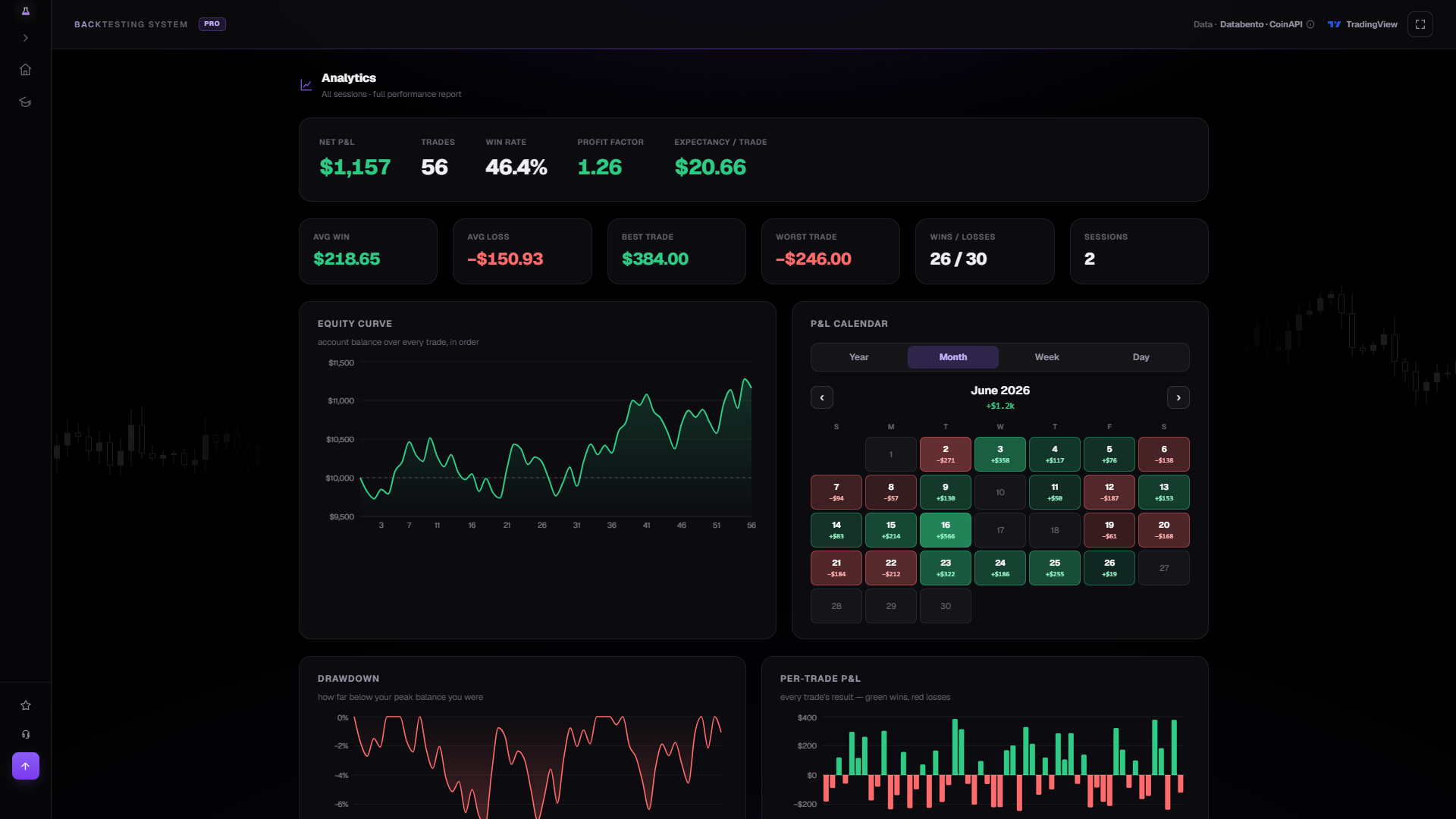
Pick SP500, drop into real price, and step through it candle by candle — you only see what was actually available in the moment. Mark your setups, log every one, and review the sample: win rate, average R, best conditions. A hundred logged S&P setups will tell you more than a year of screen-watching.
Free gives you SP500 on the most recent two weeks; Pro opens ten years, so you can test your edge across bull markets, corrections and the chop in between.
Frequently asked questions
Can I backtest the S&P 500 for free?
Yes. The free tier replays SP500 candle by candle on the most recent two weeks of real data, no card required. Pro unlocks the full ten-year history.
What's the best timeframe to backtest SP500?
Test the timeframe you trade. Intraday traders usually work a 1–5 minute chart within the session; swing traders test the hourly or daily. Consistency matters more than the exact timeframe.
Is SP500 good for beginners to backtest?
Yes — it's liquid and less erratic than the Nasdaq, so it's a clean market to learn a repeatable process on before you move to faster instruments.
Backtest SP500 free — no card needed
Replay the S&P 500 candle by candle and prove your edge on the market's benchmark. Start free in 30 seconds.
Start backtesting free →